Can a debt collector sue you after 7 years? Learn when old debts become time-barred, how state statutes of limitations work, and what to do if you face a lawsuit.
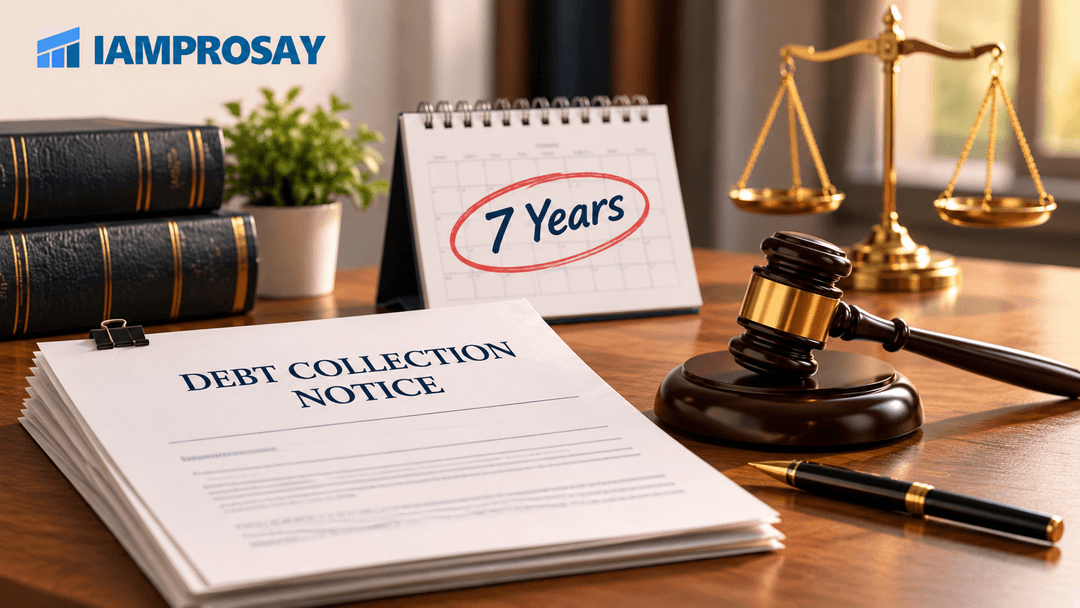
Imagine receiving a collection letter about a credit card you stopped using eight years ago. You barely remember the account, but the collector is demanding payment and threatening legal action. Can they really take you to court after all this time?
Can a debt collector sue you after 7 years? The answer depends on your state's laws, the type of debt, and when the legal deadline started.
Many people assume debts automatically disappear after seven years. However, credit reporting deadlines and debt lawsuit deadlines follow different rules. Understanding the difference can help you respond without accidentally weakening your legal position.
A debt collector generally cannot lawfully sue you after seven years if the applicable statute of limitations has expired. However, some debts have longer limitation periods, and certain actions may restart the deadline. The seven-year credit reporting rule does not determine whether a collector can file a lawsuit.
The seven-year rule primarily concerns how long negative information can appear on your credit report.
Under the Fair Credit Reporting Act (FCRA), most negative credit information can generally remain on your report for approximately seven years.
For collection accounts and charge-offs, the reporting deadline is tied to the original delinquency, with a statutory maximum of seven years plus 180 days from that delinquency.
Two different timelines apply:
For example, a debt might disappear from your credit report while its lawsuit limitation period remains open.
If an outdated account or an incorrect delinquency date remains on your report, understanding how to remove inaccurate collections from your credit report can help you identify errors and dispute them.
The statute of limitations establishes a legal deadline for bringing a debt collection lawsuit.
Many states have limitation periods of approximately three to six years for consumer debts, although some allow longer periods.
The deadline may depend on:
There is no single nationwide deadline covering every consumer debt.
One state may allow four years to sue over certain credit card debts, while another may allow six years or longer.
The applicable law may also depend on where you lived, your contract's terms, and state rules governing which jurisdiction's limitations period applies.
Before assuming an account is too old to collect, verify the correct state law and the date the limitation period began.
A time-barred debt is a debt for which the applicable lawsuit statute of limitations has expired.
Under the Fair Debt Collection Practices Act (FDCPA) and Regulation F, covered debt collectors cannot file or threaten a lawsuit to collect time-barred debt.
However, in many states, collectors may still request voluntary payment through lawful letters or calls.
For example, suppose you stopped paying a personal loan eight years ago. If the applicable limitation period was six years and nothing restarted or paused it, the debt may be time-barred.
That does not necessarily mean the balance has been canceled. It means the expired claim cannot lawfully be pursued through a new collection lawsuit by an FDCPA-covered collector.
Some debts, including federal student loans, follow different legal rules.
Different consumer debts may have different limitation periods, even within the same state.
Credit card balances may be treated as written contracts or open accounts, depending on state law. The limitation period may begin after a missed payment or another legally significant default event.
Personal loans commonly involve written agreements. Their deadlines depend on applicable contract laws and repayment terms.
Medical bills may be subject to state contract limitation periods. The applicable deadline depends on the agreement and circumstances.
Auto loans may involve secured lending rules or different contract provisions. Debts that have already resulted in court judgments can have separate enforcement periods.
Yes, in certain states.
Making a partial payment, promising to pay, or acknowledging an old debt may restart or revive the lawsuit limitation period under applicable law.
Suppose an old credit card debt is time-barred, but you agree to pay $20 to stop collection calls.
Depending on state law, that payment could revive the creditor's opportunity to pursue legal collection.
Before paying an old account:
Not every payment restarts the deadline, and some states provide additional protections against revival.
Receiving court papers for an old account can be intimidating, but ignoring them is risky.
Even when a claim is time-barred, a court may enter a default judgment if you fail to respond and raise available defenses.
The statute of limitations usually must be asserted as a defense rather than assumed to apply automatically.
Understanding how to get a debt lawsuit dismissed can help you identify possible defenses, including an expired filing deadline, incorrect account information, or insufficient proof of debt ownership.
Step 1: Review the summons and complaint.
Identify the plaintiff, amount claimed, court information, and response deadline.
Step 2: Check the debt's timeline.
Gather statements, payment records, collection letters, and information showing when the account became delinquent.
Step 3: Examine the statute of limitations.
Determine whether the applicable deadline expired before the lawsuit was filed.
Step 4: File a timely response.
Follow your court's procedures and raise the statute of limitations as an affirmative defense when applicable.
If you're unfamiliar with the process, learning how to respond to a summons for debt collection can help you understand how an Answer works and why filing deadlines matter.
Step 5: Consider legal assistance.
A consumer protection attorney or legal aid organization can help evaluate your defenses.
Responding to a lawsuit does not mean admitting you owe the debt.
The FDCPA protects consumers against abusive, deceptive, and unfair collection practices.
Covered collectors generally cannot:
Original creditors collecting their own debts are generally outside the FDCPA, although state laws may provide additional protections.
IAMPROSAY's Debt Collector Help Guide explains common collection practices, communication restrictions, and consumer rights.
You can also report suspected violations to the Consumer Financial Protection Bureau or Federal Trade Commission.
Before admitting responsibility or agreeing to repayment, request information identifying the debt, the creditor, and the amount claimed.
If you dispute the debt in writing within the applicable 30-day validation period, an FDCPA-covered collector generally must pause collection of the disputed debt until verification is provided.
IAMPROSAY's Debt Collection Letters resources can help you understand written disputes and validation requests.
Keep copies of correspondence and proof of delivery.
Remember that sending a dispute letter does not replace responding to an actual lawsuit.
So, can a debt collector sue you after 7 years? It depends on whether the applicable statute of limitations has expired, not simply how old the account is.
A debt may be too old for a lawful collection lawsuit, but it does not automatically disappear after seven years.
Before paying an old debt or responding to a collector's demands, review the account history, applicable state laws, and available consumer protections.
If you receive court papers, act before the response deadline. Understanding your rights can help you make informed decisions and avoid unnecessary legal risks.
Possibly. A lawsuit may still be permitted if the applicable statute of limitations has not expired. The seven-year credit reporting period does not determine lawsuit deadlines.
No. Most negative credit reporting has a time limit, but the underlying debt does not automatically disappear. Whether a creditor can sue depends on applicable law.
In many states, yes. Collectors may request voluntary payment, but FDCPA-covered collectors cannot sue or threaten to sue over time-barred debt. Some states impose additional restrictions.
A payment generally does not restart the federal credit reporting period. However, under certain state laws, a payment may restart or revive the limitation period for filing a lawsuit.
Review the court papers, identify the response deadline, collect your payment history, and check the applicable statute of limitations. File a timely response, raise appropriate defenses, and consider consulting an attorney.